How Long Is 30 Feet? 10 Common Things That Are 30 Feet
30 feet is equivalent to 360 inches or approximately 9.14 meters. Because this is a significant distance, it can be challenging to visualize how long is 30 feet without practical context. Comparing this length to common objects and familiar spaces makes the measurement much easier to grasp.
The following reference guide provides a table and detailed examples to help you accurately visualize what 30 feet looks like.
How Far Is 30 Feet?
| Unit | Equivalent Of 90 Feet |
| 30 feet in inches | 360 inches |
| 30 feet in cm | 914.4 cm |
| 30 ft in mm | 9144 mm |
| 30 ft in meters | 9.144 meters |
10 Common Things That Are 30 Feet Tall
Three Standard Cars Parked In A Row
One of the simplest ways to estimate 30 feet is by imagining two standard cars parked bumper to bumper. Since the average vehicle typically measures between 14 and 15 feet in length, two cars placed end to end create a reliable approximation of how long is 30 feet. This is a practical mental benchmark for gauging driveway depth, parking space, or road permit.
Half the Length of Bowling Lane
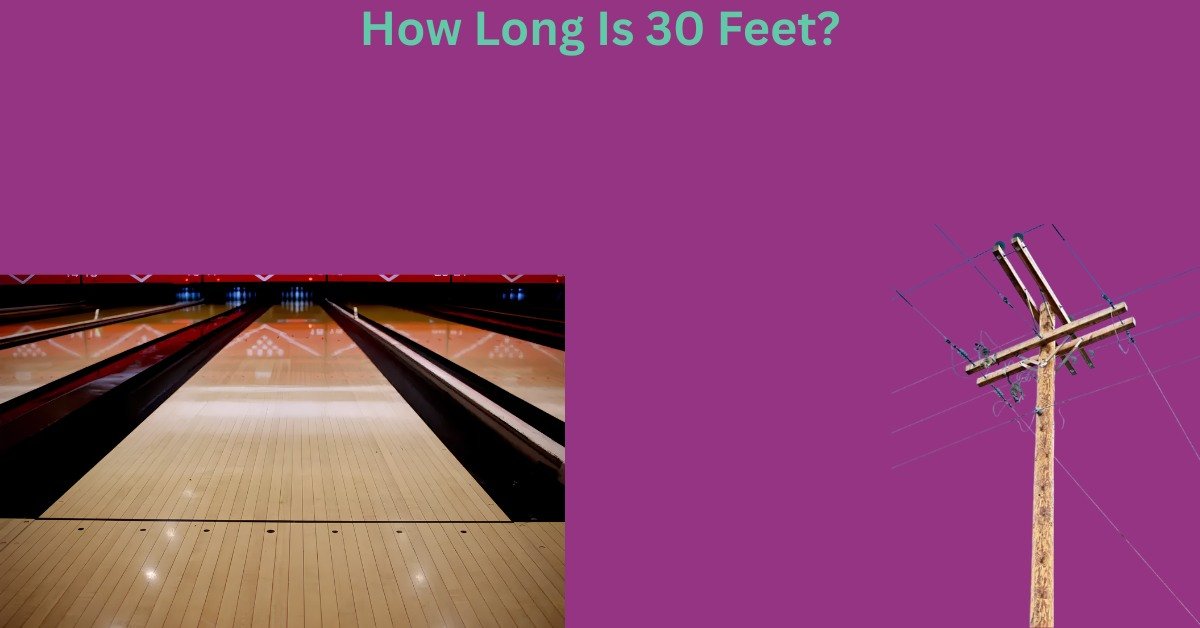
Consider the length of a bowling lane. A standard lane spans 60 feet from the foul line to the headpin, the distance from the foul line to the midpoint of the lane is exactly 30 feet. If you have experience bowling, you can visualize the distance between the starting area and the midway point of the lane to establish a clear sense of scale of how long is 30 feet.
A Short Telephone Pole
In terms of vertical height, many standard utility poles standing along residential streets reach roughly 30 feet. Observing one of these poles provides a helpful reference for estimating height, which is useful when gauging the scale of trees, residential siding, or small outdoor structures.
A Small Yacht
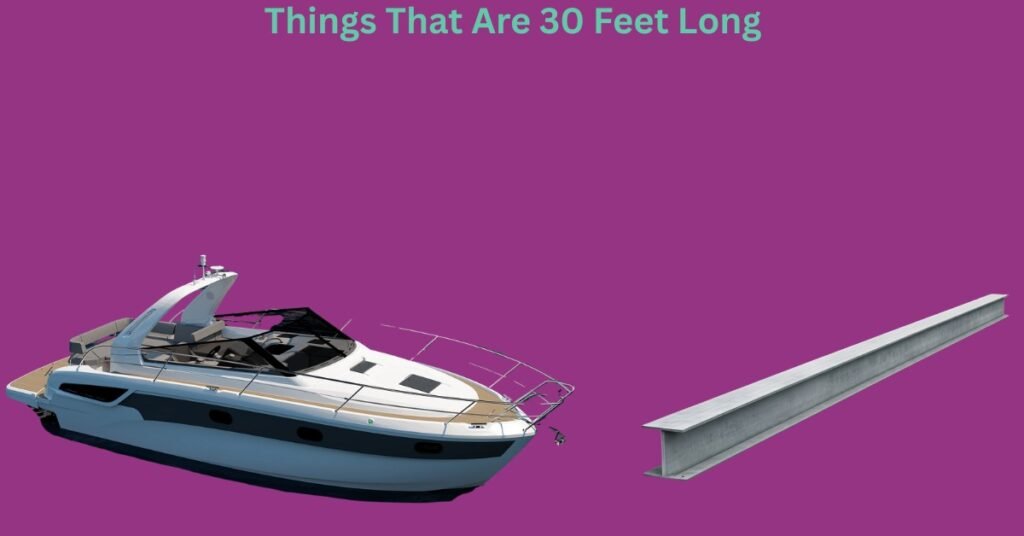
For a sense of volume and length in a recreational context, consider a 30 foot yacht. While such a vessel is substantial enough to feature cabins, storage, and seating, it remains a manageable size. Recalling the silhouette of a medium sized boat at a marina offers a solid mental image of how long is 30 feet in a three dimensional space.
A Portion Of A School Bus
You can use a school bus as a gauge. Because a standard school bus is typically 40 to 45 feet long, 30 feet represents roughly two thirds of its total length. Visualizing the bus and mentally trimming a small portion off the rear provides a helpful approximation for larger scale estimations and how long is 30 feet.
Height Of Large Tree
Mature trees, often found in parks, gardens, and residential areas, typically reach heights of about 30 feet. Observing a tree of this size provides a convenient natural reference for estimating both vertical and horizontal distances, which is particularly helpful when gauging landscaping needs or property dimensions.
Width Of A Basket Ball Court
For those familiar with athletic facilities, a standard basketball court offers a useful frame of reference. Since these courts are 50 feet wide, 30 feet represents slightly more than half that distance. If you have experience on a court, you can easily visualize this length by imagining a span that covers a bit more than half the width of the playing surface.
A Long Construction Beam
In construction and engineering, 30 foot steel beams are frequently used to span significant gaps without the need for intermediate supports. Recognizing these beams in bridges or large buildings highlights the structural significance of how long is 30 feet and how it functions to bridge open spaces.
A Small Swimming Pool
Recreational spaces, such as small residential swimming pools, also serve as excellent examples. A 30 foot pool is long enough for lap swimming while still fitting comfortably into most backyards. This provides a practical sense of how 30 feet translates into functional, usable space.
Length Of A Large Living Room
Many spacious living areas or open-concept floor plans measure roughly 30 feet in length. Walking across such a room offers a tactile sense of the distance, which is particularly helpful when planning interior layouts, arranging furniture, or assessing the proportions of a large room.
Conclusion
Visualizing a length of 30 feet becomes much simpler when equated to familiar objects. Whether you picture three cars parked bumper-to-bumper, a backyard swimming pool, or the dimensions of a large room, these comparisons transform an abstract measurement into something tangible and practical.
By relying on these common benchmarks, you can confidently estimate distances in everyday scenarios without the need for precise tools. This intuitive approach makes it significantly easier to plan spaces, compare dimensions, and apply measurements with greater accuracy.
FAQs
How Big Is 30 Feet?
30 feet is about 360 inches or 914.4 cm big.